Short Fiction Writing Challenge
In partnership with the National Writing Project of Acadiana + The Current
2025
”Read Between The Lines”
Prize recipient
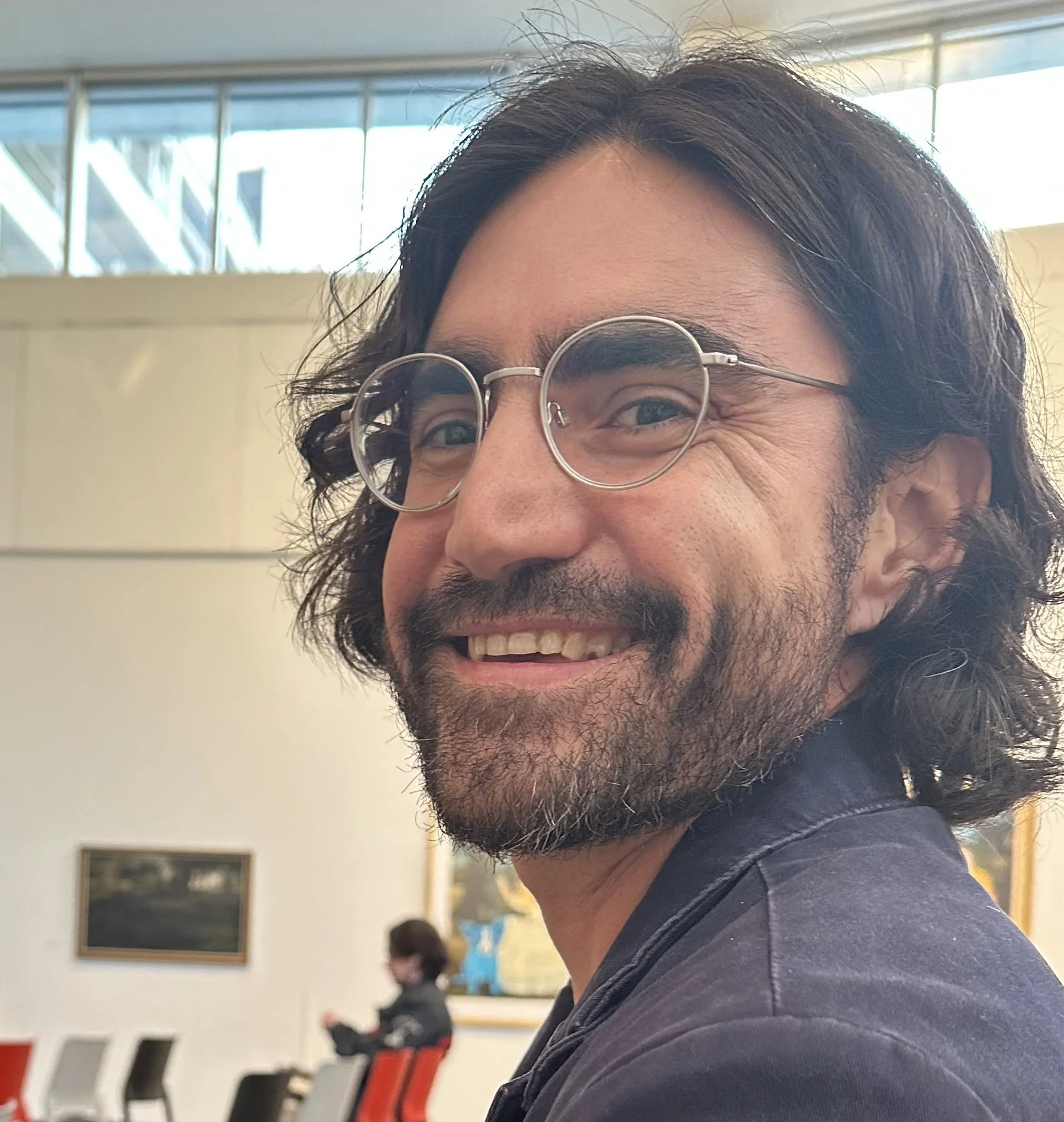
“Crow Weather”
by: Justin Bacqué
JUSTIN BACQUÉ works at sea and writes in his spare time. Poetry, stories, but mostly songs these days. He lives in Lafayette, Louisiana.
Crow Weather
Some houses have too many doors.
Crow weather. That’s what my mother called it. All the leaves are brown and the sky is gray she
would sing. When you might pull on your old cardigan to go for a walk and the streets are still,
quiet save for the occasional caw, echoing strangely in the cold air.
—————————————
It was crow weather when my parents took me along to see the house, on a small side street,
tucked away, the driveway littered with dead leaves, rustling in the October wind. They crushed
underfoot as we slipped through the wrought iron gate. Some mystics read portents in tea leaves;
but omens hide in other places. I was no seer; just a teenager in an ill-fitting hoodie, dragged
along on an errand.
—————————————
I could see the house only for what it seemed: a house, old and rambling, an odd patchwork of
architectural styles, but still only a house. A house to get lost in, as some guests would nervously
joke when shown the bathroom during parties, a house of many doors. Even doors to nowhere:
reclaimed plantation doors, gleamingly polished, panelling the walls in some rooms, doors that
once slid shut on antebellum secrets. But, no, just a house. Walls, windows, floors, a roof. Doors.
The normal things. Of course, it was also the kind of place you might unexpectedly encounter a
patch of cold in some corner of a room. Old houses are drafty. Even in summer.
—————————————
Crows and ravens are omens, as well. Ill omens, some say. I don’t remember hearing any of their
ragged calls the day my parents dragged me along to see the house. So much has happened since
then. But it was their time of year and they must have been lurking in the pines. I’ve always been
fond of them. They mourn the missing, too.
—————————————
To see something out of the corner of your eye, you have to first be looking. I saw nothing at that
age, when my parents bought the house and we moved in. My eyes were fixed on the pages of
the books I incessantly read, books full of monsters, human and otherwise. I dreamed about the
monsters outside the walls. On the other side of every door.
—————————————
In the den of the house there was a pool table, left by one of the previous owners, and my friends
would come over to play, the clack of billiards and teenage hysteria a racket long into the night.
The den was lined with plantation doors and the felt of the table was green like a field, furrowed
by our sloppiness. My parents slept on the opposite side of the house and could hear nothing, no
matter how loud we became in our midnight excitement.
—————————————
It seemed, back then, that there were still mysteries. Computers were primitive but could render
strange things and open doors of their own. Doors to the wider world. And narrower places. I
could record a few moments of music from a disc and then play it backwards and hear an
incantation, an imprecation, a dark prayer. You could find mention of such things in certain
corners of the nascent internet. We hear what we want to hear. Sometimes we are listening to the
wrong things.
—————————————
And things disappear in an old rambling house. Like socks in a washing machine. Another
mystery of the modern age. I woke up one morning to find my father gone. He’d left behind all
his precious neckties and bespoke suits. I asked my mother about his absence and she said
nothing. I couldn’t interpret the look on her face. It could have been sorrow or indifference. I
don’t know which door he left through. There were many to choose from in the house.
—————————————
It was autumn again and the crows were chattering.
—————————————
I had a younger brother, too, but being a teenager, he was beneath my notice. I had no idea what
was going on in his life. We each had our own spaces in the house, our own rooms, separate
domains. He might be absent for days and I wouldn’t know. The house was too large; it did not
encourage intimacy.
—————————————
My mother left every day for work and returned to continue her labors. My brother and I ate the
food she cooked for us on the dishes she washed for us. We weren’t there to help and she never
asked us to. She knew we would leave soon enough and there would be only her and the house.
Or perhaps she knew that we would lose her first.
—————————————
The disappearance of our father had left no room for shock when we realized our mother was
gone. There was no one to ask why or where. Only the mumbling of the house. The creak of
settling walls was no answer at all.
—————————————
So the house belonged only to us then. We didn’t know the first thing about running a house. My
brother used three towels a day: one wrapped around his head, one around his waist, and one
around his shoulders, for the chill. Soon we ran out of clean towels. Perhaps that’s why my
brother went. He was a kid still. When we were even younger, in the house before, there was an
emergency ladder we sometimes used to climb out of the bedroom window. Never for an actual
fire, but only in play. Maybe my brother remembered that ladder and escaped out of a window,
for real this time. Maybe he imagined another house, one with long lines of bright laundry, criss-
crossing the yard.
—————————————
I was alone but I learned the ways of the house. There were fewer towels to wash, smaller meals
to cook. Many of the rooms were dark, their doors shut up, with dust and shadows behind them.
The dry, dead leaves from the oaks covered the yard in their seasons, the crows convened their
murders in the pines, and I let them be. Their houses were their own.
—————————————
I declined with the house and lost bits of myself every year, but, unlike the trees, I remained
diminished when spring and summer returned the world to life. The weeds grew fierce and full
and the house seemed to shrink back into the foliage like a wary animal. Or so it must seem out
there. I can only peer out through the gaps, wrapped up against the chill. Perhaps someone walks
down the street even now, crackling leaves underfoot, looking askance, quickening their step,
and shuddering from the cold breath of an empty house. Maybe they hear the crows, their caws.
The gate has never been locked. All the doors are open. The crows must speak a warning for me.
top ten finalists:
“Crow Weather” (prize receipent)
by: Justin Bacque
“The Family Recipe” (2nd place)
by: Megan Broussard
“Stalling” (3rd place)
by: Benjamin Menard
“Dolly Partons”
by: Ashlee Trahan
“Mercy in the Blackpot”
by: Jim Phillips
“A Rose for Agnes”
by: John Francois
“The Mime”
by: Lucia Moon
“She Walked”
by: Mary Hymel
“The Ceiling at Mick's”
by: Stephen Billeaud
“An Impromptu Eulogy for Uncle Joe”
by: Stevie Cavalier
theme: “Forces of nature”
2024 prize recipient
“To Catch a Ghost”
by: Lizzie Guitreau Doria
theme: “a story of perseverance”
2023 prize recipient
“The Scouring”
by: Caitlin Neal-Jones
theme: “Celebration and the South”
2022 prize recipient
“Swampkitty”
by: Scarlett Davis